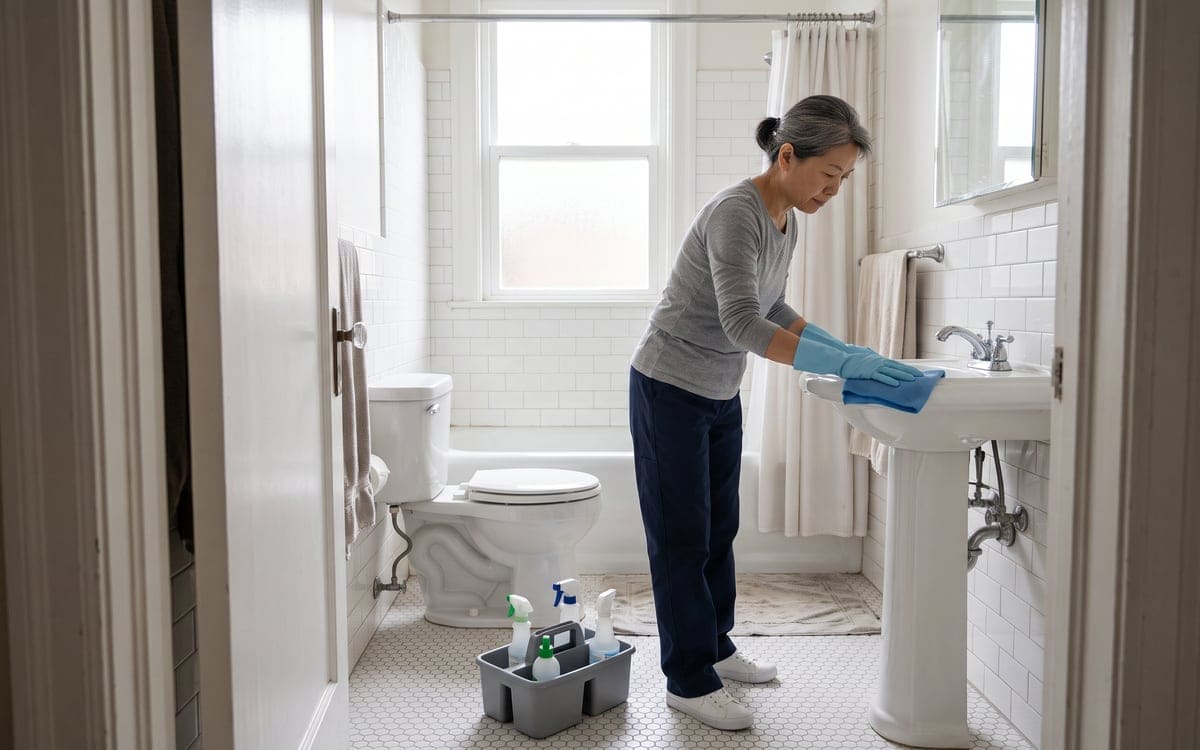
A standard visit in a San Francisco home works top to bottom, room by room
A visit works top to bottom because dust falls and water runs down. A surface cleaned low catches what gets knocked off a higher one, and a floor mopped first shows footprints by the time the dust has settled.
A first visit begins with a walk-through so the cleaner sees what you call the kitchen and what you call a bedroom. From there, the sequence runs the same every time: kitchen, bathrooms, bedrooms and living areas, and floors last.
Kitchens: counters, the sink, the stovetop and the fronts
Kitchens take the longest list. Counters get wiped twice, once for crumbs and once for anything sticky. The sink is scrubbed around the rim and under the lip of the faucet. The stovetop gets a wipe, with drip pans and grates lifted when they are not stuck. The outside of the fridge, the oven, the dishwasher and the microwave are cleaned, handles and bases included. Cabinet fronts get a wipe where fingers have been.
Standard stops at the outside of the appliances. The inside of the oven and inside of the fridge are extras to ask for on the call. Bleach never meets ammonia, vinegar or any other cleaner.
Bathrooms: tub or shower, toilet, sink, mirror, floor
Bathrooms carry the heaviest scrubbing load of any room their size. The tub or shower comes first because the glass and tile take the longest to dry: tile, grout at the seams, soap on the glass, the drain. The toilet gets the bowl, the seat, the rim and the base, in that order. A cleaner wipes the vanity, cleans the mirror without streaks, and finishes the baseboards behind the door with the handle on the door itself.
A half bath or powder room runs the same sequence over fewer fixtures. If you have a stone, old tile or a surface you worry about, we go over products on the call before the room begins.
Bedrooms and living areas: surfaces, beds, a light tidy
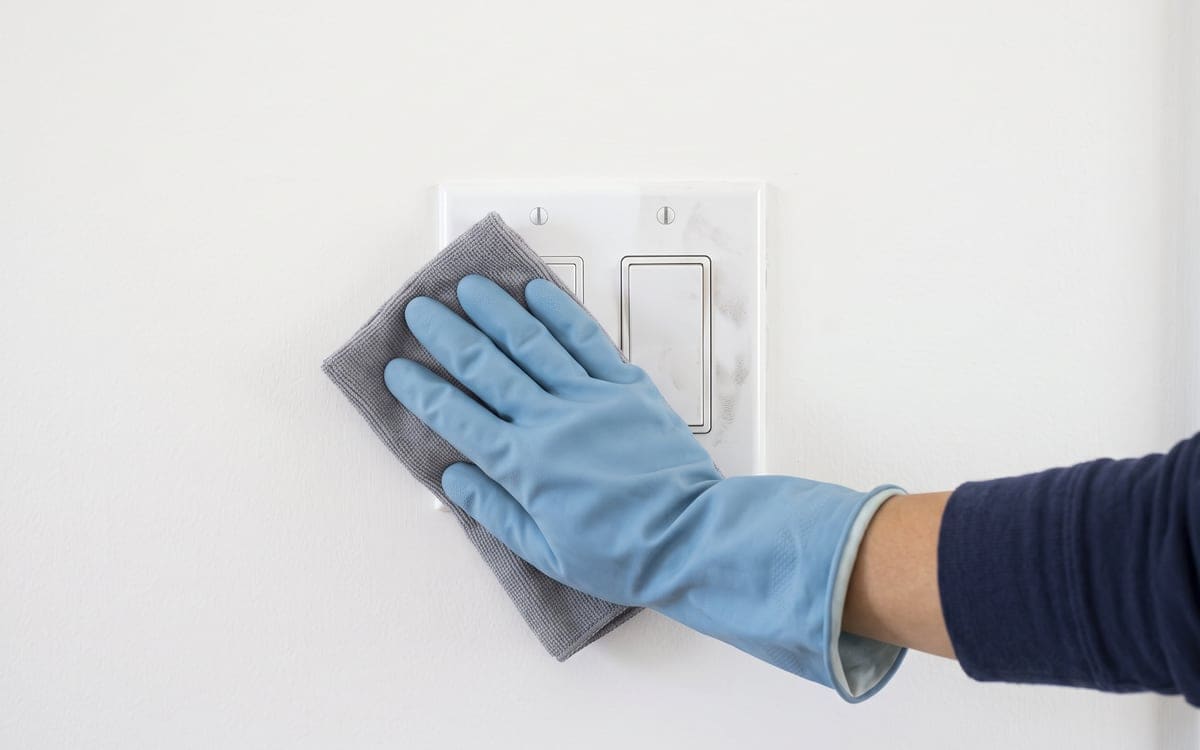
In a bedroom, a cleaner dusts the nightstands, the dresser, the lamps and the shelves, wipes mirrors and frames, cleans the baseboards and the switch plates, and vacuums the floor, with the vacuum running under the bed when the frame has clearance. Beds are made when a household asks; nothing personal is sorted or moved into drawers.
In a living room, the surfaces are the sofa table, the shelves, the TV stand and the coffee table, with baseboards and the floor to finish. A cleaner lifts the cushions, vacuums the crumbs underneath, and wipes the remote controls.
Floors come last
Floors run last so the work above them does not land on a floor that has already been mopped. Carpets are vacuumed, with attention to the edges along the baseboards where the vacuum head often skips. Hardwood takes a dry pass first, then a damp mop with little water. Tile and vinyl take a damp mop with a mild cleaner. The sequence runs from the far corner of the apartment toward the entry, so there is no walking back across a wet floor.
Sunset District tract houses often had colorful ceramic tile in the bathrooms and kitchens and wood or parquet floors, so a cleaner going into an older home in that part of the city may be meeting those finishes.
What we collect goes into San Francisco's three bins
San Francisco requires everyone to separate recyclables, compostables and trash, and the City's three bins are blue for recyclables, green for compostables and black for trash. At the end of a visit, what we collect sorts into the home's own blue, green and black bins the way the household already uses them. Hair, pet fur, tissues and paper towels are on SF Recycles' compost list, which is useful to know for the bathroom and the brush beside it.
Old cleaning products belong in none of the three bins. Residents can book the City's own program for those; we never take leftover products away with the trash.
What a deep clean adds
A deep clean works the layer below a standard visit. On top of everything above, it adds the inside of the oven, the inside of the fridge, cabinet tops dusted from the floor (nothing climbed), baseboards from end to end, grout where it has darkened, blinds, the inside of windows that open from the inside, and the floor of each closet.
A standard visit, and what to ask for on top
Extras add work, so they are worth naming when you call.
A standard visit
- Dusting from the floor.
- Kitchen counters, sink, stovetop and fronts.
- Bathrooms and floors.
- The bins.
Ask for it
- Inside the oven, fridge or cabinets.
- Baseboards and blinds.
- Windows from the inside.
A home that has gone a long stretch without a thorough clean can start on a deep version, then settle into a standard one. A deep cleaning service is the longer page on it, and the guide on what moves the price is useful before you book.
Extras worth asking for
A standard list and the list of extras are two different conversations worth having on the first call. The most common extras to raise:
- Inside the oven and inside the fridge, each a separate ask.
- Inside kitchen cabinets, emptied and wiped.
- Baseboards cleaned end to end rather than along the dust list.
- Blinds, one slat at a time.
- Interior windows that open from the inside, with the tracks and sills.
- Beds stripped and the linens changed.
- Dishes rinsed and loaded into a dishwasher.
Products you want used or avoided belong in the same conversation. A finish on the floor that reacts to the wrong solution, a stone counter that would etch under an acid, or a kitchen scent you keep off the shelf are things to say on the call.
When there is less to spend, what gets done first
A smaller visit still works when the priorities are set on the call. Kitchens and bathrooms carry the surfaces most used every day, so they land first. Dust can wait a visit; a kitchen counter and a toilet rim cannot. After the kitchen and the bathrooms, dusting takes what time is left, with the spots where it matters most done first. Floors come at the end so the home looks picked up when the cleaner leaves.
Tell us what matters most to you on the day, and the plan is built on what you want done first in a home like yours. A one time cleaning can fit here, and a weekly schedule catches it up over time instead.
What a house cleaning leaves to other trades
A house cleaning covers a wide list, with the rest of the home's work going to other trades. Outside windows above the ground floor are for a window cleaner, not for a renter leaning out a bay window. Carpet shampooing and upholstery extraction are a carpet company. Peeling paint on an older sill belongs to the landlord or a painter. Mold is a job for a mold professional. Pest work, duct cleaning, junk hauling, hoarding, biohazard and trauma cleanup are each their own trade.
Household hazardous waste never rides out with the trash. The resident books the City's own program for leftover cleaning products, and we leave them alone until that pickup is in the calendar.
By room, what the visit covers and what to ask for
The table below is one way to see the standard list beside the extras in the same place.
| Room | Included in a standard visit | A deep clean adds |
|---|---|---|
| Kitchen | Counters, sink, stovetop, outside of appliances, cabinet fronts, floor | Inside the oven, inside the fridge, cabinet tops from the floor, inside the cabinets |
| Bathrooms | Tub or shower, toilet, vanity, mirror, baseboards, floor | Grout where it has darkened, inside the medicine cabinet, the shower-door track |
| Bedrooms | Dust surfaces, baseboards, switch plates, vacuum under the bed when it clears | Headboards, inside the closet, under the bed frame when it moves |
| Living areas | Furniture surfaces, under cushions, floors, remotes wiped | Baseboards end to end, a detailed vacuum of corners, around the TV cables |
| Entries and halls | Door frames, light switches, mats, floors | Inside the coat closet, boots and shoes paired |
| Windows | Fingerprints on glass that face a room | Sashes, sills and tracks on windows that open from the inside |