How remodel dust comes out of a home
Fine renovation dust tends to settle again on surfaces that have already been wiped, so we work top down and leave the floors for the end.
1. A walk-through once the trades are done
We clean finished surfaces, not an open job site. Before anyone opens a cabinet, we walk the home with you to find out what the project was, when the last trade left, which rooms were touched, which were sealed off, and which finishes went in.
2. Dust from the top down
Ledges, the tops of door and window frames, light fixtures and the outside grilles of supply vents all get wiped from the floor, nothing climbed. Duct cleaning is a different trade, so we clean the covers rather than reach inside.
3. Cabinets and drawers inside and out
A new cabinet hung on install day picks up sanding dust before the counters go in. Every box, drawer, shelf and door gets a wipe before any dish or glass goes in. Toe-kicks and the gap under the lowest shelf, the same.
4. Fixtures, counters and appliance fronts
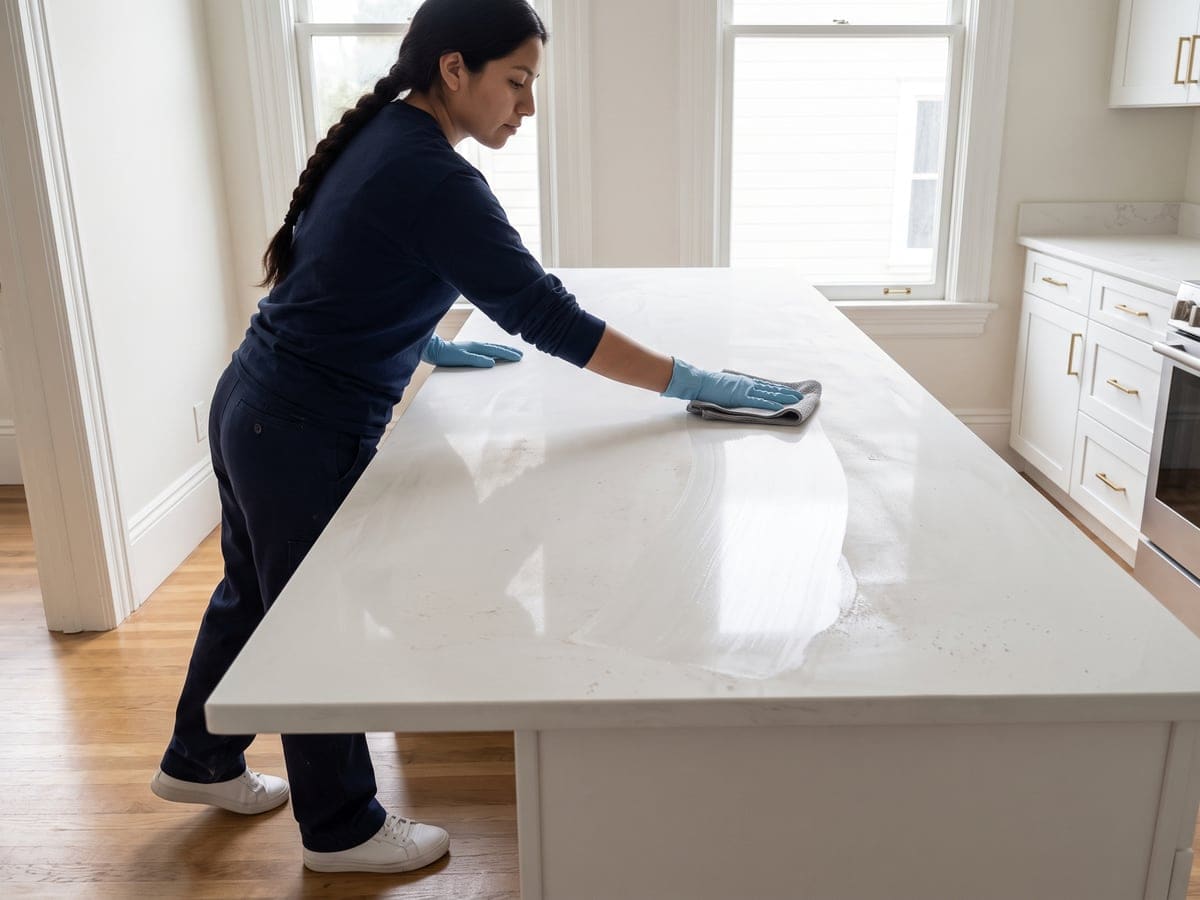
Painters leave haze on glass and chrome. Installers leave stickers, protective film and finger marks on new fixtures, and factory oil sits on new stainless. We go over leftover film, stickers and residue with what the finish allows, and if a surface has a care sheet taped to it, we read it before anything touches it.
5. Inside windows and their tracks
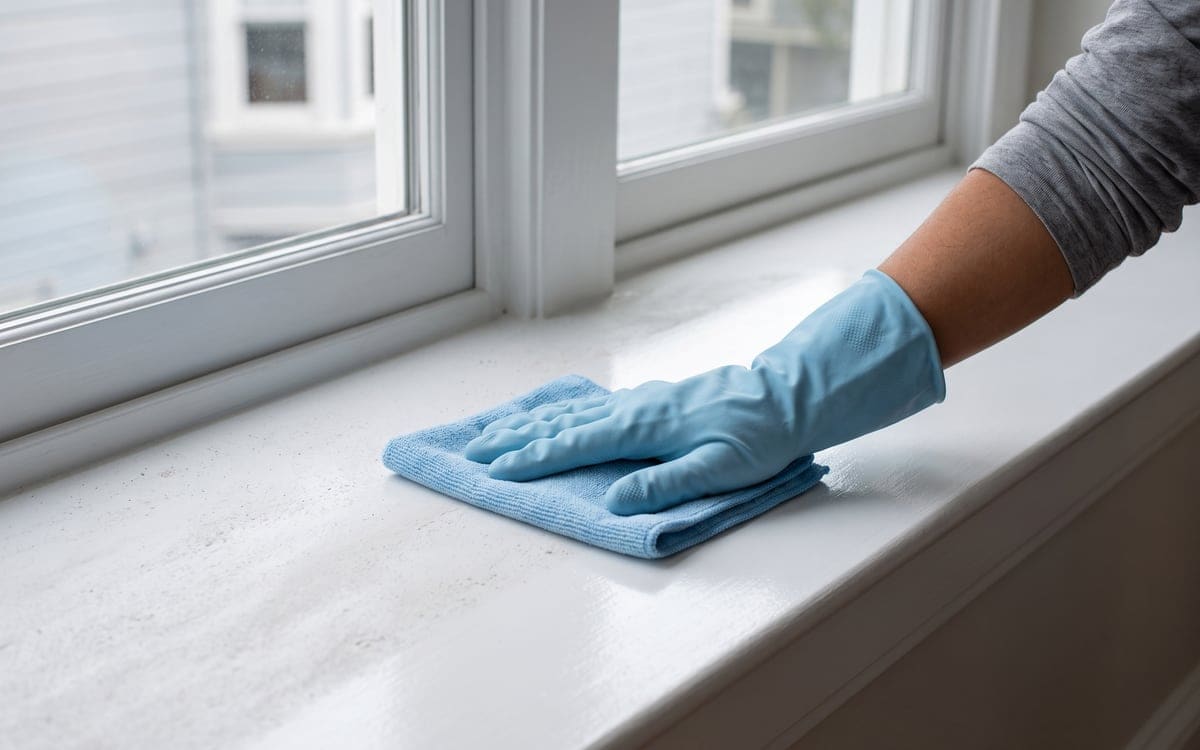
Fine sanding dust gets packed into the channel of a window track and will not come out with just a wipe. The vacuum nozzle goes in first, worked back and forth along the length, and only then do we wipe out what is left. If the building has old wood sashes, the pass is a gentle one. The exterior face of a window above the ground floor stays off our list.
6. Floors at the end
The floors wait because every surface above them is still shedding dust. We vacuum first; a wet mop only follows where the finish can take it. A damp mop over a floor still coated in drywall dust will turn that dust to paste and streak it along the grain. If the hardwood went in during this project, the finish has to be fully cured before any mop touches it, which we go over on the call.
7. A second pass for dust that settles later
Dust from the project can keep settling after the first clean, especially once the HVAC has cycled on. A second visit picks that up, planned on the call once the first clean is done.
| Stage | Who usually does it | What it covers |
|---|---|---|
| Rough clean | The contractor's crew | Debris, drop cloths, taped plastic, piles swept out |
| Final clean | Our cleaners | Fine dust off every ledge, cabinets inside and out, fixtures, windows from the inside, floors last |
| A touch-up later | Our cleaners | Dust that settles after the first clean |
The handoff from the contractor's crew to our cleaners happens once the debris is out.
Rough clean and final clean
The contractor's crew usually clears the debris. A final clean takes the fine dust off finished surfaces.
Rough clean
- Debris, scraps and packaging out.
- Usually the contractor's crew.
- Not work we take on.
Final clean
- Fine dust off every ledge and frame.
- Cabinets, fixtures and windows from the inside.
- Floors last.
When post-construction cleaning fits, and when a deep clean fits better
When this is the right page
The project is done, the debris has left the home, and dust is still finding you. New cabinets, new windows, new paint or new floors need their first real wipe-down before the home gets used.
When another service fits
If no trades have been in the home and the place has simply gone a while without a thorough visit, a deep clean of a lived-in home is the right page. If the home is already empty for a move, an empty unit on move-out day covers the inside of cabinets and appliances with nothing in them. The full list of what we clean is on everything we clean.
Rough cleaning (debris, drop cloths, taped-off plastic) belongs with the contractor; we come after that is out. We never scrape or sand old paint, and we make no lead or asbestos claim.
What the visit covers
Our pass works through every high ledge from the floor up, each new cabinet and drawer wiped inside and out, each inside window washed with the sill and the track, the covers on supply and return vents, baseboards and door casings wiped by hand, and the outside of every new appliance. The floors come at the end; the vacuum goes first, and a damp pass only where the finish can take it. New finishes get what their care sheets allow, and if a slab or a tile has a note taped to it, we read the note before anything touches that surface.
Off the list for this visit: debris hauling or junk removal, scraping or sanding paint, lead or asbestos work, duct cleaning, carpet shampooing or extraction, outside windows above the ground floor, and pest work. Each one of those gets handed to another trade; we tell you which one.