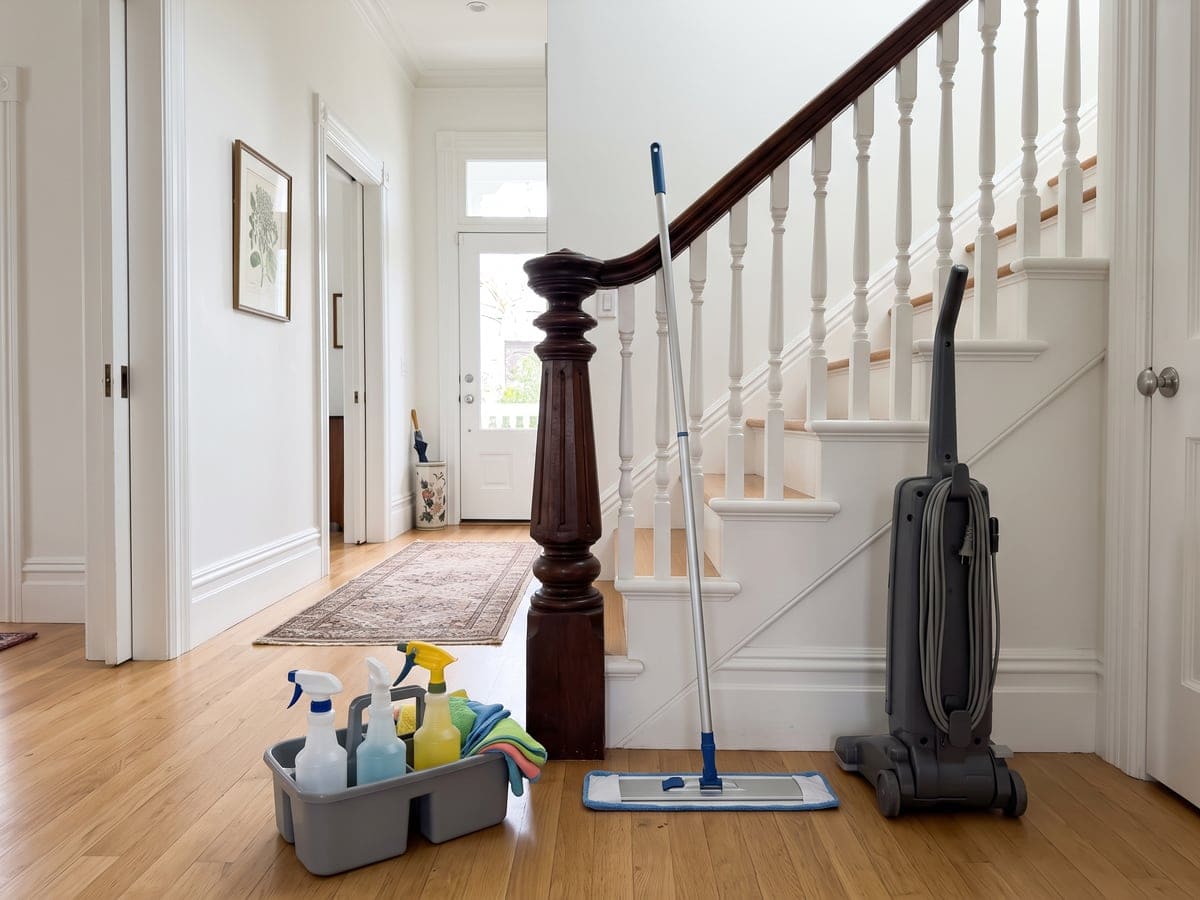
Before the cleaning
Do I need to be home?
You do not have to be. Whether anyone will be there, and how we get in if nobody is, goes on the call: a buzzer and a code, a key or a lockbox, a doorman with a visitor sheet, a service elevator with a reservation. We settle the arrangement before the day. For a visit with no one home, the maid service page has the longer version.
How do keys, buzzers and front desks work?
We ask about them on the call. If there is a buzzer and a code, we need the code. If there is a doorman and a visitor policy, we need the name on the sheet. If a key or a lockbox is at the building, we need to know where. If the building asks for advance notice on a service visit, tell us on the call and we work with that. No promise about any building's rules.
What should I put away first?
A short tidy of loose papers, mail and clothes on the dining table helps us get to surfaces. Big put-away jobs are not needed: a cleaner handles the work for you, and the point of hiring one is a resident gets their time back. Running the vacuum ahead of us is also not helpful, since it undoes the visit before it starts. Dishes in the sink are fine to leave; we work around them unless the sink itself is the thing you asked us to reach.
What about pets?
Say on the call what kind of pet, where they stay during a visit, and whether they are nervous around people they do not know. Shedding dogs leave more hair for the vacuum, which adds to the floor work. Cats sometimes want a quiet room with the door closed. Products a pet or a person in the household is sensitive to can be swapped on the call too, as long as the swap is settled before the day. Regular visits with pets at home have the longer version.
What gets cleaned in San Francisco
What does a standard cleaning include?
The kitchen is counters, the fronts of the appliances and cabinets, the sink and the stovetop. The bathrooms are the tub or shower, the toilet, the vanity and the mirror. Living and sleeping areas are a reset of surfaces you touch every day; beds are made if you ask. Dusting runs from the floor up, nothing climbed, and the floors come last on the way out. The room by room guide is the longer version.
What is the difference between a deep clean and a regular clean?
A regular visit resets the surfaces you touch every day. A deep clean reaches what a regular visit skips: baseboards, cabinet fronts, grout, inside the oven and fridge, the tops of light fixtures. A deep clean can make sense as a first visit after a long gap, or before a schedule starts.
Do you clean inside the oven and fridge?
Inside the appliances is extra work on top of a standard visit, so each one belongs on the call rather than as a surprise on the day. Inside the cabinets works the same way. For a move-out, every drawer, every shelf and every appliance is already in the plan, since the unit is empty and everything is reachable.
Do you wash windows?
Inside glass goes with a deep clean, or on request as an extra. The outside of a window above the ground floor is a different trade: a window-washing company that works from the outside of the building. We never lean out of a window to reach the outside glass, and we never stand on a sill, a tub edge or a chair to reach anything high. Sills and tracks on the inside are reachable from the floor, and those come with the glass.
What do you not do?
Carpet and upholstery cleaning, outside windows above the ground floor, pressure washing, duct cleaning, mold work, pest treatment, junk hauling and cleanouts, hoarding and biohazard work, laundry service, and taking away old cleaning products. The services hub holds the full list of what we leave to other trades.
Prices
How is house cleaning priced in San Francisco?
A price is set by the cleaning the home needs: the rooms and bathrooms, how long since the last thorough visit, pets, how we get through the building, and whether this is a one time cleaning or part of a schedule. What moves the price walks each driver through on its own.
Why not a price over the phone before we know the place?
The size of the place is only part of the picture. A one-bedroom that was last cleaned yesterday and a one-bedroom that was last cleaned a season ago need two different visits, and the price for each is different. On the call we go over the home with you and the price is agreed before any cleaning starts; the cost guide spells it out.
San Francisco rules
Do you sort the trash, recycling and compost?
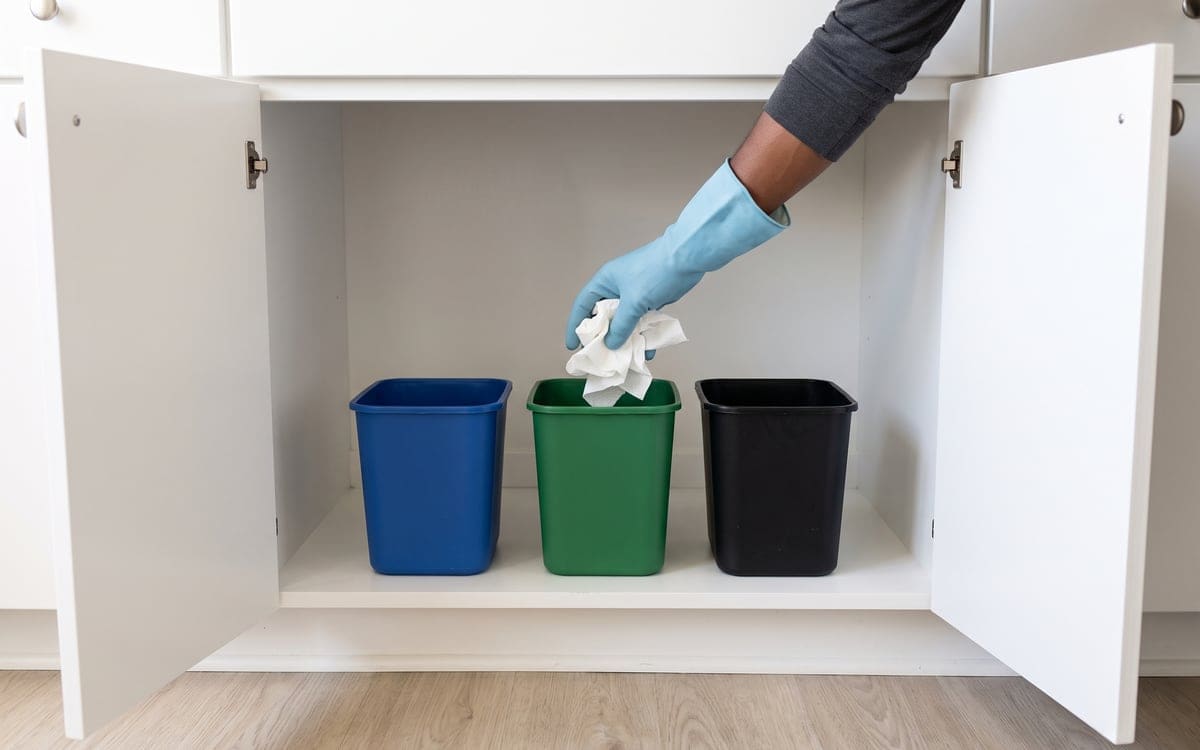
At the end of a visit, what we collected sorts into the home's own blue, green and black bins the way the household already uses them. Everyone in San Francisco is required to separate recyclables, compostables and trash, and the bins are blue for recycling, green for compost and black for trash. We do not sort for the building and we make no claim about any household's compliance.
Can you take my old cleaning products?
Household hazardous waste belongs in none of the three bins. SF Environment says some items are hazardous waste that should not go in the black, green or blue bin, and that disposing of them improperly is illegal. San Francisco residents can request a free home pickup by appointment, and the resident must be present. The resident books it, and we do not take customers' products.
Will a move-out cleaning get my deposit back?
No promise. The California Civil Code lets a landlord use a deposit for cleaning needed to return a unit to the same level of cleanliness it had when the tenancy began, and sets a few other rules on top of that. Questions about your lease go to the statute and to the landlord. For the cleaning side, our move-out checklist runs it room by room.
Is San Francisco water hard?
SFPUC describes the water its Regional Water System serves as soft, with very low levels of total hardness and alkalinity. Spots and film can still happen for other reasons, so we clean the way each surface needs. No promise about any particular stain.
Talking to us
What happens when I call?
We ask about the place: rooms and bathrooms, how long since it was last thoroughly cleaned, pets, the building and how we get in, and what matters most to you about the visit. From there we match it to a kind of cleaning, and the price is agreed before any cleaning starts. For the full list of things to have ready, open the contact page.
What should I have ready?
The number of rooms and bathrooms, the kind of cleaning you want, when the place was last thoroughly cleaned, the building and how we get in, pets, products you want used or avoided, and anything to leave exactly as it is. Nothing on that list has to be settled first. The call sorts out what is missing.
Can I leave my number instead of calling?
The callback form under the phone number takes a name, a number and a short note, and we come back to it. The form is the second choice because a short note cannot carry what a call carries, and a call tends to cover more of the home at once. For the number itself and the form together, open the contact page.