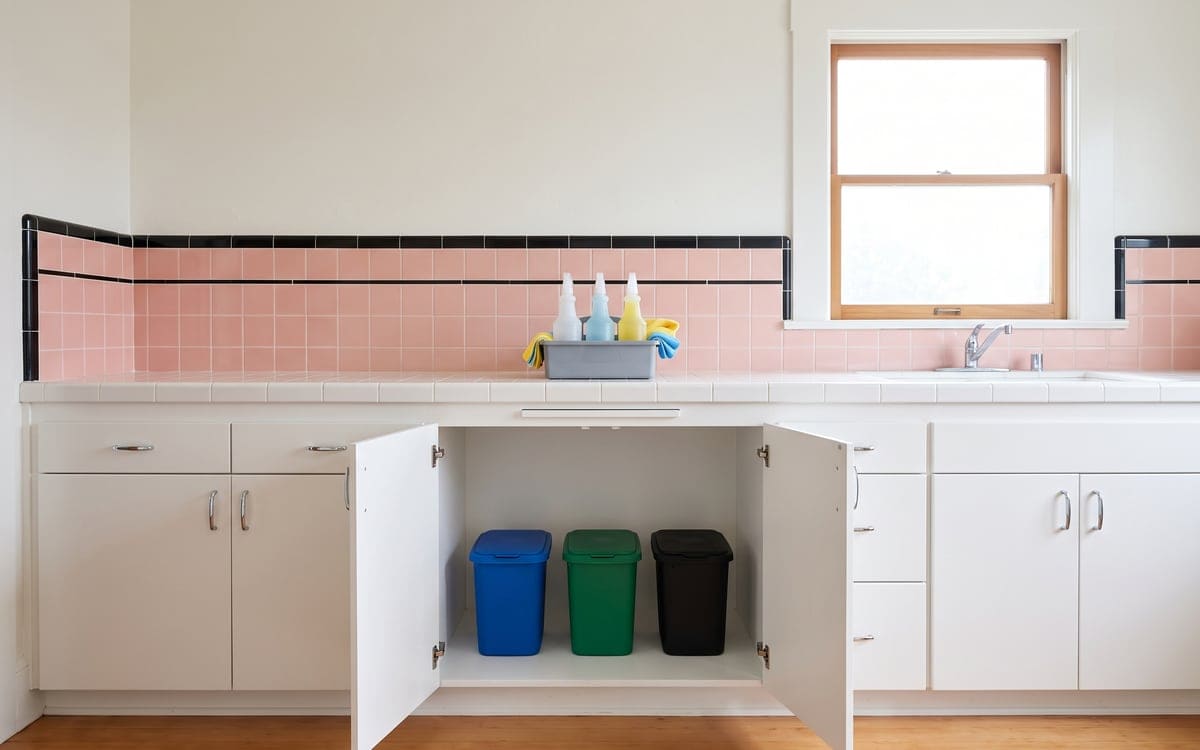
Everyone in San Francisco sorts three ways
San Francisco requires everyone to separate their recyclables, compostables and trash under an ordinance the City passed in 2009. The City's Environment Code defines source separating as dividing refuse where it is thrown away, before collection, into separate containers for recyclables, compostables or trash. What the three bins hold is the way the household has set them up at home, not something a crew decides at the end of a visit.
San Francisco's three bins after a cleaning
What a house cleaning turns up, sorted the way the City asks.
Blue: recycling
- Loose, dry and clean.
- No plastic liners.
Green: compost
- Food, soiled paper and plants.
- Hair, pet fur, tissues and paper towels.
Black: trash
- What cannot be recycled or composted.
- Hazardous waste goes in none of the three.
Sources: San Francisco Environment Department, Recycling and composting in San Francisco: FAQs; San Francisco Environment Department, Mandatory Recycling and Composting Ordinance; San Francisco Environment Department, SF Recycles: Compostable items; San Francisco Environment Department, Dispose of household hazardous waste safely.
A visit works with the home's bins as they are. Nothing new goes in, nothing stops being sorted, and the setup stays as the household uses it.
Blue takes recyclables loose, dry and clean
Blue is for recyclables. The City says all recyclables must be loose, dry and clean in the blue container, and no plastic liners are accepted in it. Nothing goes in inside a bag.
A specific item is a check-the-item question; the City's SF Recycles page has an item search. If a container has not been rinsed, it goes aside for the household to deal with rather than into the recycling.
Green takes food, soiled paper and plants
The green bin takes food, soiled paper and plants, which are composted into soil used by local farms. Soiled paper and food scraps are the useful ones for a cleaning. All of it is organic matter, and all of it belongs in green, not blue.
A dead houseplant, trimmings from a windowsill herb or the leaves that got carried in on a shoe are plants. Larger yard waste is a different question, and the household handles that one.
Hair, pet fur, tissues and paper towels go in the green bin too
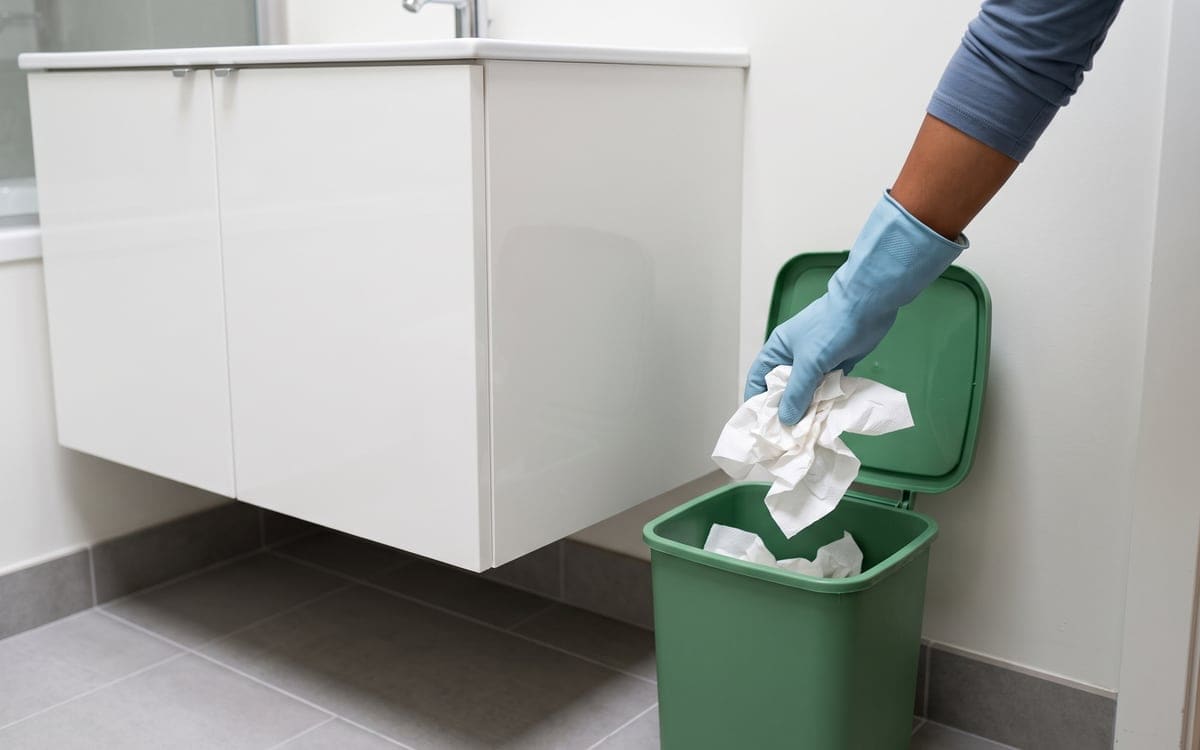
The green bin takes more than most people think. Hair, cotton balls, swabs, feathers, fur from cats and dogs, tissues and paper towels are on the City's SF Recycles list of compostable items. That is useful to know in a bathroom and anywhere a pet lives.
The bathroom is where it matters most: hair, cotton balls, swabs, tissues and paper towels are all on the City's list. On a visit, that pile goes in the green bin the household already keeps nearby.
Black is for what is left
Black is for trash: what cannot be composted and cannot be recycled. Food scraps, including gristle, go in green, not black. Hazardous waste belongs in none of the three bins.
Indoor bins work well kept together and color-coded
Three indoor bins next to each other, with the right color on each, is the simplest setup. The City's property guidance says to keep indoor recycling, compost and trash containers together so that it is equally convenient to dispose of all three streams, and to use green for compost, blue for recycling and black or gray for trash. The guidance is written for properties and works for homes too.
When the bins sit together, reaching the right one takes no extra steps.
A small compost bin in the bathroom
For restrooms, the City recommends only a compost bin labeled "Paper towels only". The guidance is written for properties, and it works just as well at home. Hair, tissues, cotton balls and paper towels are already on the compost list, so a small green bin next to the bathroom vanity catches those items. A cleaner can lift it and empty it into the main green bin at the end of a visit.
Old cleaning products go in none of them
Some household items are hazardous waste that should not go in the black, green or blue bin, the City says, and e-waste, hazardous waste and other toxic products do not belong in the recycling, composting or trash streams. The Recology SF Household Hazardous Waste Facility accepts chemical sprays, liquids and powders, solvents, and household batteries from residents.
Residents can request a free home pickup of household hazardous waste through the City's program. The resident books it and stays home for the pickup, so the leftover products go out with the home that owns them. We never take leftover chemicals off the premises with the trash, and we never pour them down a drain.
Leftovers stay in their original containers and never mix: incompatible products might react, ignite or explode.
What a cleaning visit does with the bins
At the end of a visit, what we collected sorts into the home's three bins as the household already uses them. The hair from the bathroom and the pet fur land in green. The spray bottle from a half-finished product goes aside for the household to deal with through the City's program.
A fuller list, with the common items a cleaning turns up and where they land, sits below. The right column points to the City's own page for the item.
| What a cleaning turns up | Which bin | The City's page |
|---|---|---|
| Recyclables, loose, dry and clean | Blue | Loose, dry and clean |
| Food scraps, soiled paper, dead plants | Green | The green bin |
| Hair, pet fur, cotton swabs, tissues, paper towels | Green | Compostable items |
| Chemical sprays, liquids and powders, solvents, batteries | None of the three | Household hazardous waste |
| Empty product containers | Check the item | SF Recycles item search |
Whether a given cleaning-product container is accepted in blue depends on the container; check the City's item search.
When a cleaner can help with the bins
A cleaning visit sorts what the visit turned up, and that is what we promise. What was already in a bin stays where the household put it, since the crew did not see what went in. A trash chute stays alone. A hazardous waste pickup is the resident's to book with the City, since the program needs the resident present and the products stay with the home. Our maid service page covers how a visit begins and ends. A weekly schedule keeps the bins ahead of the household, and green cleaning on the City's terms is where the product conversation lives.
Move-out cleaning uses all three bins. A San Francisco apartment cleaning in a tenant-occupied home turns up less, but the sort is the same.