Work high to low, from the floor
Starting at the highest point reachable from the floor and working down keeps the sequence from doubling back. Shelves, upper cabinet exteriors, door frames and trim within arm's reach go first; anything that requires climbing is left alone. What gets disturbed falls lower; the floor is the final surface.
| Room or area | What a deep cleaning covers |
|---|---|
| Kitchen | Cabinet interiors, exhaust fan, all surfaces that contact food |
| Bathroom | Grout and caulk lines, area behind and beside fixtures, vanity base |
| Bedrooms and living areas | Mattress and pillow surfaces, fabric furniture, baseboards, door frames |
| Windows (inside) | Glass, sills, frames and tracks |
| Floors | Vacuumed, then damp-mopped |
Kitchen insides
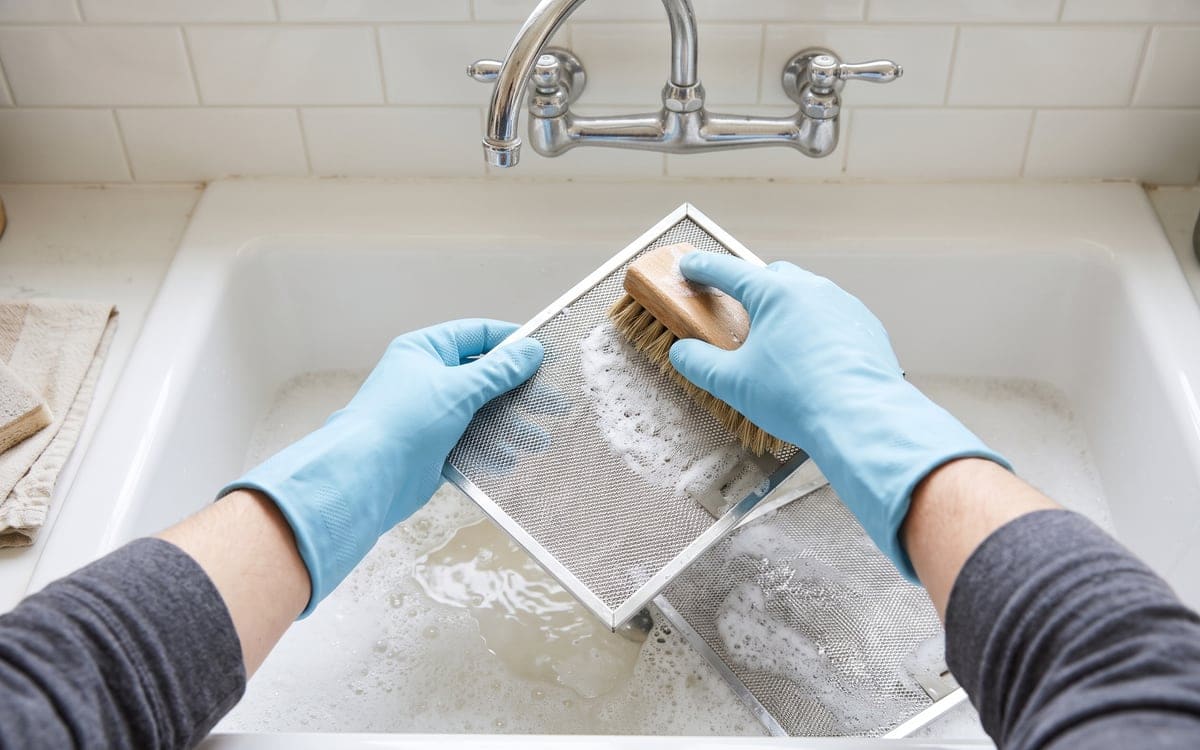
Cabinet shelves and the exhaust fan are where a kitchen deep cleaning differs from a regular visit. Thoroughly washing with hot, soapy water all surfaces that come in contact with raw meat, poultry, fish and eggs1 between food preparation steps keeps those surfaces clean. Spraying any cleaning product into a cloth before applying it, rather than spraying directly onto surfaces or into the air2 avoids spreading product inside enclosed cabinet spaces.
Bathroom detail
Grout lines between tiles, the caulk around the tub and shower, the area behind the toilet, and the floor beside and behind the vanity are the bathroom surfaces that a routine cleaning passes over. Those surfaces get worked carefully in a thorough pass.
Never mix cleaning products together or add bleach to other chemicals, because mixing cleaning products can create toxic vapors.3 In a bathroom where multiple products are stored under the sink, this applies to anything used in that room.
Trim, frames and switch plates
Baseboards, door frames and light switch plates collect dust and fingerprints. A damp cloth covers these surfaces in the same pass as the room's other hard surfaces, going from top to bottom so any debris falls toward the floor.
Switch plates can be wiped down in place. Door frames run the full height of the doorway; working top to bottom covers the areas that hands contact most.
Windows from the inside
A deep cleaning checklist covers interior windows: the glass, the sill, the frame and the track at the bottom of the pane. Exterior glass, from outside the building, is a separate trade.
Floors last
Floors go last in each room because everything from the rest of the cleaning falls there. Vacuuming before mopping picks up loose material before the wet mop can spread it. A damp mop follows to address what the vacuum leaves on hard floor surfaces.
Carpet areas get a thorough vacuum pass, including along baseboards and around furniture.
What to leave to other trades
A deep cleaning covers surfaces accessible from inside the unit. Exterior window cleaning, gutter cleaning, air duct cleaning and pest control each involve different access and different trades.
Washing bedding in hot water and drying it completely4 can address dust mite exposure; that step stays with the resident.
After renovation work, the construction dust and debris that a contractor leaves behind call for a scope beyond what a standard deep cleaning covers. Where a tenancy has just ended, a move-out cleaning handles the same depth of work with the end-of-tenancy scope in mind. The tasks that involve exterior access, specialized equipment or repairs are outside the cleaning checklist.