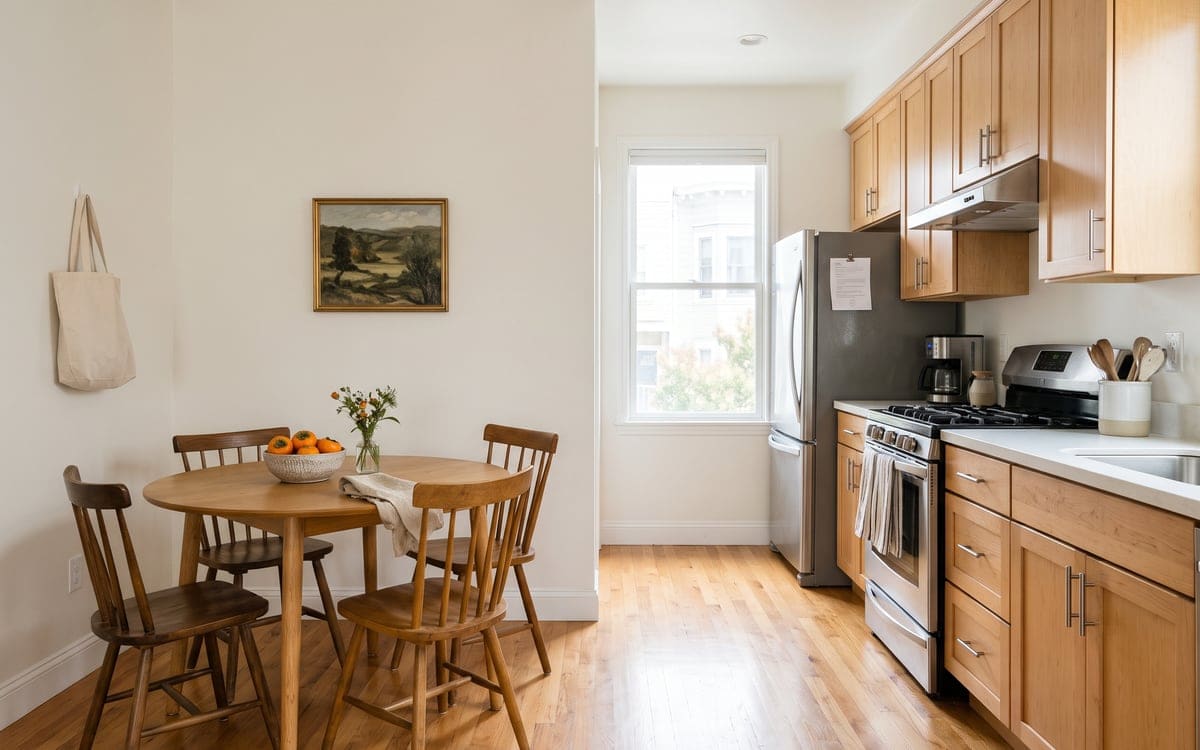
The answer turns on who lives there more than the size
A studio in which one person works from home sees different wear than a two-bedroom with two adults who are out most days. Add a dog to a one-bedroom and the rhythm shifts, even when the floor plan is the same as the pet-free unit next door. The rooms count for the clean itself, which drives the time and the price, but the pace at which the clean is needed again sits with the household.
A standard visit covers the surfaces that need resetting between visits in each room. A home that uses those surfaces more needs the reset back sooner. A home that cooks more and showers more between visits is working the kitchen and bathrooms harder.
San Francisco's small homes and one-person households
About 41 percent of San Francisco's housing units are studios or one-bedrooms.1 About 39 percent of San Francisco households are one person living alone.2 Households average 2.21 people, with renter households at 1.99.3
For a one-person household in a studio or a one-bedroom, monthly can carry the home when the household handles counter wipes and the floor between visits. For a couple in a one-bedroom, the same monthly rhythm fits some homes, while others go every other week when the kitchen and bathrooms want to be kept further ahead. Say which category sounds like the home when you call, and the schedule follows the rooms and the household, not the floor plan alone.
Pets, cooking and guests move the needle
Pets shift the rhythm faster than square footage does. A dog that sheds adds to the vacuuming load every day, and a cat with a litter box in a studio bathroom shortens the useful life of a bathroom clean. A dog that goes out in the fog and back in on a wet day puts more on the entry floor than one that walks a dry sidewalk.
Cooking at home moves the needle in the kitchen. A kitchen that handles two meals a day sees more splatter on the backsplash, more grease on the hood and more crumbs on the counter than a kitchen that reheats on the way out. A household that cooks most dinners usually wants the kitchen set back more often than a household that eats out.
Guests do the same for the floors and the bathroom. A home that hosts most weekends works both harder than one that does not, and a short-term rental host runs on the turnover rather than the week.
| Household shape | What it adds to the work |
|---|---|
| One person, no pets, small home | A single occupant works a small home lightly, with the household covering the week-to-week |
| Couple, no pets | Two occupants add some surfaces but share them |
| Couple with a dog or cat | A pet adds daily shedding or litter work |
| Household with kids at home | Kids run high surface traffic in kitchen and bathroom |
| Household with a home office and a lot of cooking | More cooking and more hours in the home drives the pace |
| Short-term rental | The visit tracks the turnover, not the week |
Every other week is a common middle
Of the three usual slots, every other week is a common middle for a household that is unsure. A biweekly cleaning service holds a home a long way without needing to carry a week's worth of extra buildup. For a household that is between a monthly rhythm that feels short and a weekly rhythm that feels like a lot, every other week is often the fit.
The choice is not an inherent rule for an apartment or a house. If the home carries fine on four weeks, monthly is enough. If a kitchen or a bathroom looks three weeks ahead by the start of the second week, weekly is probably the closer fit. A household picks a starting interval and sees how the home sits between the first visits.
When monthly is enough
Monthly works when the household handles the daily tidying and the kitchen and bathrooms do not take enough traffic in four weeks to overload them. A one-person studio with no pets fits here. A household on a monthly cleaning fills in the gap with a wipe of the counter after dinner, a quick vacuum before the week starts, and a bathroom reset over the weekend; the monthly visit catches up on the rest.
Monthly is not the right fit for a home with a long list of surfaces that would gain from a weekly or every other week visit. If three weeks in a kitchen reads as too far along, monthly is working the home harder than it needs to. The right call is the one where the state of the home does not fall off a cliff between visits.
How often to schedule house cleaning: start with a deep clean, then the routine
For a new recurring cleaning service, the first visit is often a deep clean before the routine begins. The baseboards and the ledge above the shower door get a reset on the first visit so the recurring visits that follow can hold the line rather than catch the home up. The inside of the oven and the inside of the fridge are asks on the call. A deep cleaning is the longer page on this first visit; a recurring maid service covers the regular visits after that, and a weekly cleaning service is the tightest of the three recurring intervals.
How quickly the deep layer comes back depends on the household and the home. If a kitchen or a bathroom looks ahead of a regular visit sooner than expected, say so on the call and we can route one visit as a deeper one before the schedule picks back up.
What goes into the price in either rhythm is on the cost guide. The home, the scope and the time since the last clean all shape the number.